


A Mama's Step-by-Step Playbook: From Swatching to Safe Stand-Time
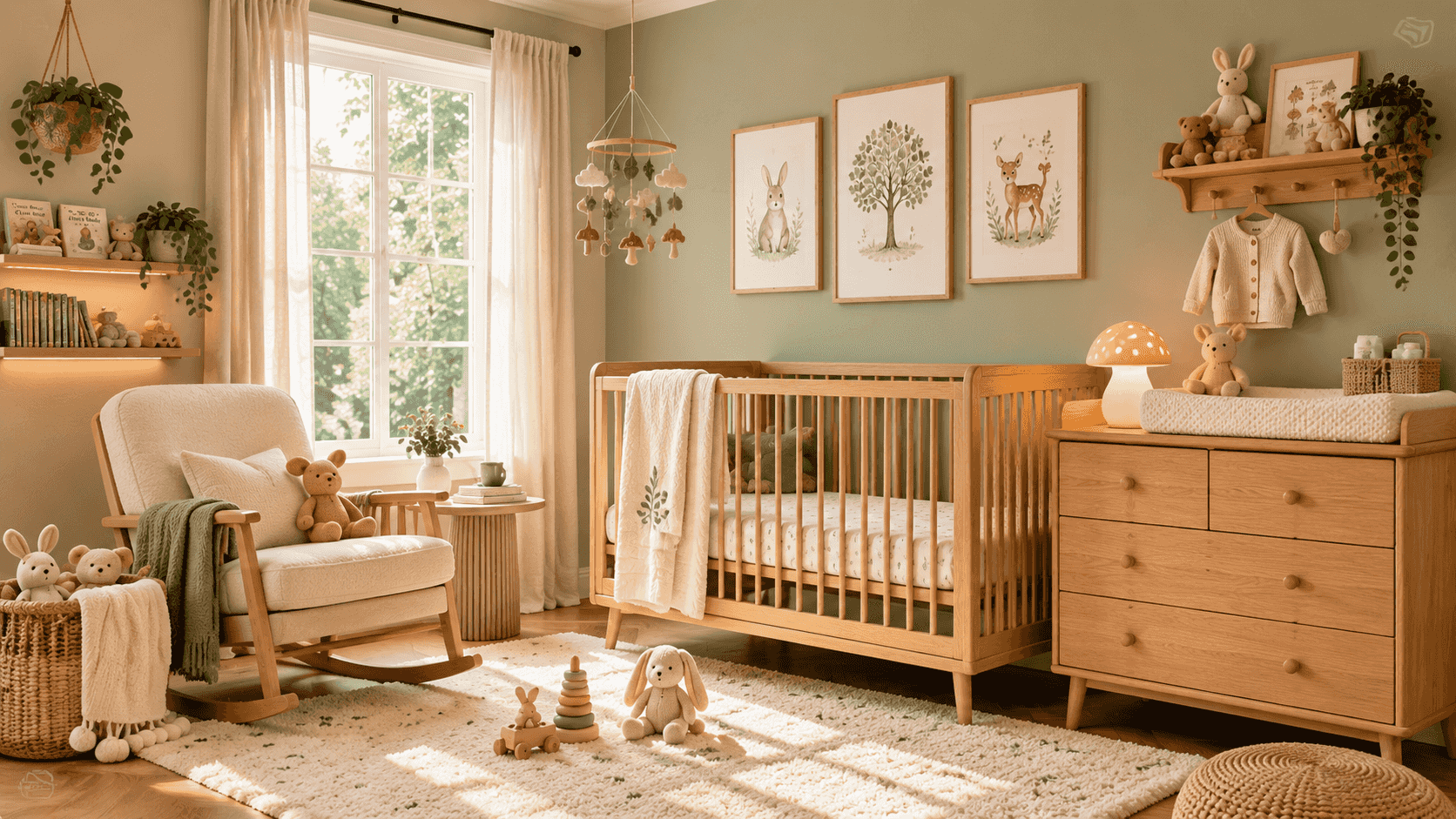
If you've spent any time on Pinterest or Instagram lately, you've probably noticed that sage green is having a major moment in nursery design.
And honestly? It's not just a trend.
As you get ready to nest, you might be wondering: "Is sage green actually worth the hype, or am I just going to end up repainting in two years?"
Here's the secret: Sage green is the ultimate sleep-friendly, gender-neutral powerhouse. It combines the calming elements of nature with a subtle, gray-mist undertone that keeps it feeling sophisticated rather than childish.
Whether you're planning a full DIY overhaul over the weekend or hiring a pro, this guide breaks down everything you need to know—from the best paint brands and light reflection values (LRV) to non-toxic VOC safety and realistic budgets.
Chapter 1: Why Sage Green is the Ultimate Nursery "Sleep Whisperer"
You might be thinking, "It's just green. What's the big deal?"
Well, sage isn't your average green. Imagine taking a fresh leaf color, adding a spoonful of warm gray, and diluting it with a hint of morning mist. The result is a shade that isn't glaringly bright, nor is it dreary. It brings a grounded, quiet beauty into the room.
The Science Behind Better Sleep
Our brains process color through the amygdala—the region that manages alertness and stress. High-saturation colors (like bright yellows or hot pinks) trigger a light fight-or-flight awareness, which can make it hard for a tiny, overstimulated human to wind down.
Sage green, on the other hand, acts like a visual white noise machine. It whispers to the brain: "You're safe. It's time to rest."
According to discussions across Reddit and What to Expect forums, many parents notice their babies settle faster and experience fewer night wake-ups in rooms with muted green tones. Soft green hues are proven to encourage the body's natural melatonin release while keeping cortisol (stress levels) low.
In short: This color practically helps soothe your baby to sleep.
It's a Lifesaver for Moms, Too
Think about those 3:00 AM feedings or diaper changes. When you flip on a dim light against a warm sage wall, your eyes won't burn, and your nervous system won't instantly snap wide awake. It creates a serene, low-stress environment for both you and your baby.
Chapter 2: The Top 3 Sage Green Paint Colors in the US (Tested & Reviewed)
There are hundreds of "sage" paint cans sitting on the shelves at Lowe's and Home Depot, but a few specific shades consistently reign supreme among interior designers and nursery creators.
Here are the top 3 foolproof, highly-rated picks for 2026.
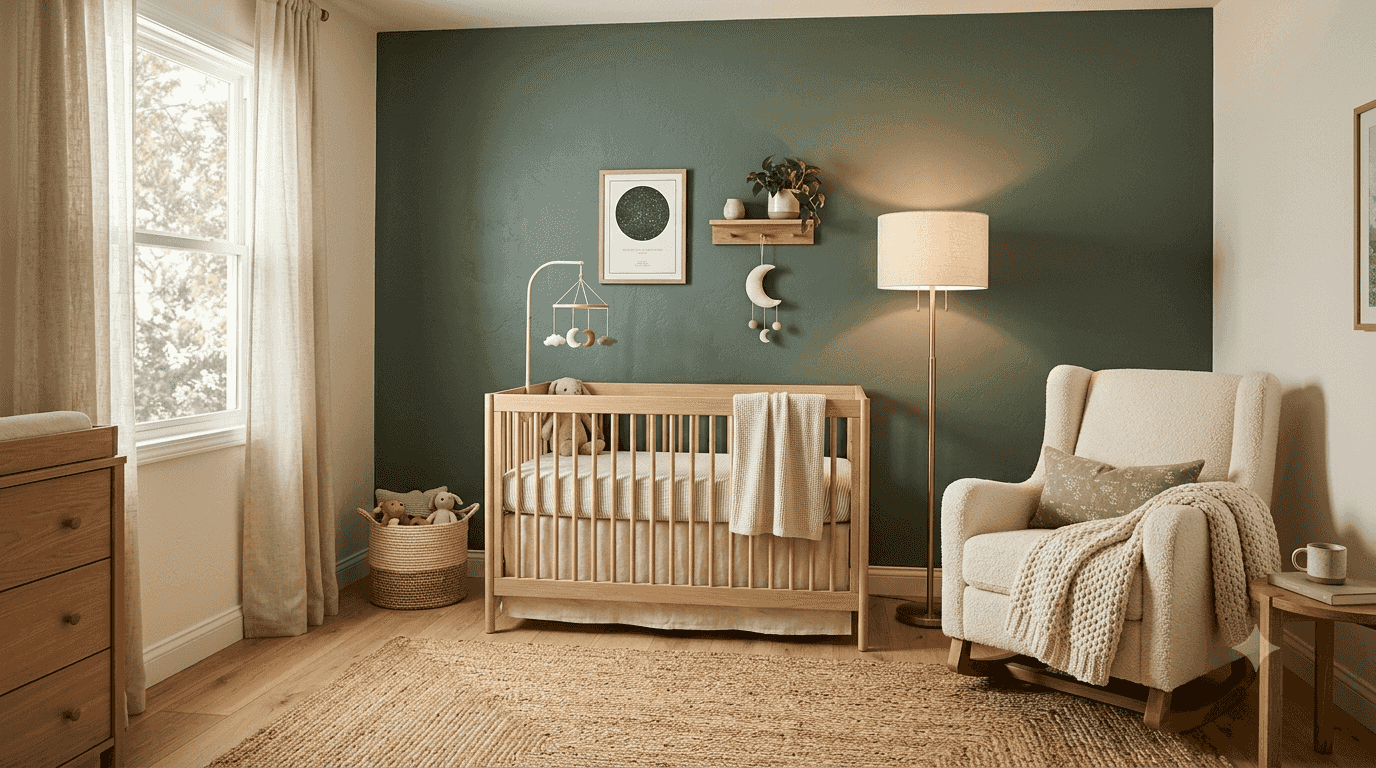
2.1 Sherwin-Williams Evergreen Fog (SW 9130) — The Accent Wall Royalty
- The Shade: Sherwin-Williams named this its Color of the Year a few years back, and it has stayed a staple ever since. It's a gorgeous blend of green + gray + a whisper of blue. Think of an evergreen forest blanketed in early morning fog.
- LRV (Light Reflectance Value): 30 (Medium-deep). It absorbs a fair amount of light, giving the room a cozy, "hugged" feeling.
- Where to Use It: An Accent Wall. It creates a grounded backdrop directly behind a light wood or white crib.
- Pair It With:
- Clean white trim (like SW Alabaster or Pure White).
- Light oak, walnut, or rattan furniture.
- Brushed brass or champagne bronze hardware.
- Price: $55~$85 per gallon at Sherwin-Williams stores.
2.2 Benjamin Moore October Mist (1495) — The All-Over Room Favorite
- The Shade: If Evergreen Fog is the grounded, moody option, October Mist is its breezy, gentle counterpart. Inspired by the silvery-green stem of a flower, it's a soft, airy sage with subtle warm undertones.
- LRV: 46.5 (Medium-light). It reflects plenty of light, meaning it won't make a small bedroom feel dark or cramped.
- Where to Use It: All 4 Walls. Unlike deeper greens that can feel overwhelming at scale, October Mist was explicitly formulated for all-over coverage. It feels fresh, open, and utterly tranquil in morning sunlight.
- Pair It With:
- Crisp white linens, sheer curtains, and ivory nursery gliders.
- Layered tonal greens (darker green throw pillows or blankets).
- Natural textures like linen, cotton, and jute.
- Price: $70~$95 per gallon at local Benjamin Moore retailers.
2.3 Farrow & Ball Lichen (No. 19) — The Heritage & Vintage Selection
- The Shade: Farrow & Ball is famous for its rich, chalky, handcrafted pigments. Lichen takes inspiration from the subtle, shifting colors of nature. It's a muted, deeper green with a touch of gray-blue underlying its base.
- LRV: 34 (Medium-deep). It builds a quiet, historic, and deeply cozy space.
- Bonus Points: Farrow & Ball paints hold certified Toy-Safe status under strict European safety standards, giving extra peace of mind if a toddler ever decides to test the walls with their teeth.
- Where to Use It: Vintage, Grandmillennial, or French-Country Nurseries. It complements antique dressers, wrought-iron cribs, and floral wallpaper.
- Pair It With:
- Soft creams (like F&B Slipper Satin).
- Muted rose or dusty blush accents.
- Distressed wood and brass wall sconces.
- Price: $120~$145 per gallon (Premium import).
Color Comparison at a Glance
| Feature | Evergreen Fog (SW) | October Mist (BM) | Lichen (F&B) |
| Vibe | Moody, fog-covered forest | Airy, sunlit meadow | Historic, chalky vintage |
| LRV (Brightness) | 30 (Medium-Deep) | 46.5 (Medium-Light) | 34 (Medium-Deep) |
| Undertone | Cool (Gray-Blue) | Warm (Silvery-Yellow) | Neutral-Cool (Gray) |
| Best Used For | Feature/Accent Wall | All 4 Walls | Vintage/Statement Rooms |
| Price Point | $55–$75 / gal | $70–$90 / gal | $110–$140 / gal |
Pro Tip: Never buy a full gallon based on a digital screen or a paper paint swatch! Always order a peel-and-stick sample (like Samplize) or a small sample can to paint a 2x2 ft square on your wall first.
Chapter 3: Room Orientation & Lighting (Don't Get Tricked by Natural Light)
You found the perfect swatch, bought the paint, slapped it on the wall, and... wait, why does it look completely gray or sickly yellow?
Your paint didn't lie to you—your room's lighting did.
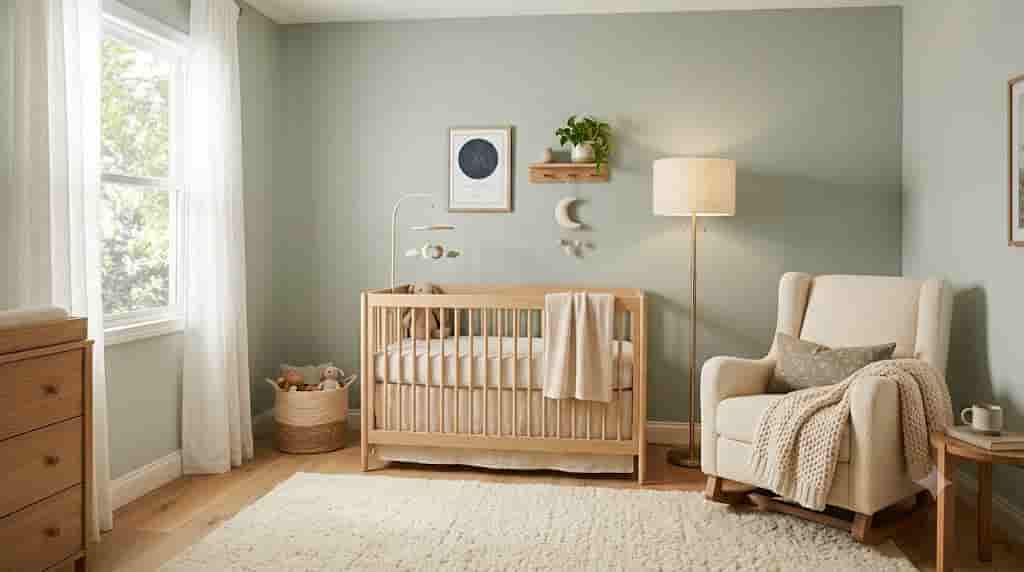
North-Facing Rooms (Cool, Blue Light)
North-facing windows receive indirect, cool, slightly bluish sunlight all day. If you put a cool, gray-heavy sage green in a north-facing nursery, Cool Light + Cool Paint = A gloomy, dull room.
- How to Fix It: Choose a warm-toned sage green with subtle yellow or golden undertones (think matcha rather than mint).
- Top Pick for North Light: Shades like Farrow & Ball Green Ground or Benjamin Moore Guilford Green. If using October Mist, pair it with warm 2700K lighting and cream-colored furniture to balance the cool daylight.
South-Facing Rooms (Warm, Golden Light)
South-facing rooms are flooded with bright, warm, yellow-toned sunlight all day long. Warm light intensifies paint warmth. Warm Light + Warm Paint = Your green might turn muddy or yellow.
- How to Fix It: Choose a cool-toned sage with strong gray or blue undertones to cut through the intense golden light.
- Top Pick for South Light: Sherwin-Williams Evergreen Fog shines here. The bright sunlight pulls out the green while the gray undertones prevent it from washing out.
Chapter 4: Foolproof Palette Formulas
Not sure what colors go with sage green? Here are four color combinations that never fail:
[ Sage Green ] + [ Warm Cream / Alabaster ]  ➜ Clean, bright, and timeless
[ Sage Green ] + [ Natural Light Oak ]       ➜ Organic, calming, and Japandi-inspired
[ Sage Green ] + [ Dusty Blush Pink ]        ➜ Soft, whimsical, and sweet
[ Sage Green ] + [ Brushed Brass / Gold ]    ➜ Elevated, sophisticated, and vintage
3 Popular Aesthetic Playbooks
- Modern Farmhouse Nursery: Sage green feature wall + white board-and-batten wainscoting + light oak crib + jute area rug.
- Boho Woodland Nursery: Sage green walls + rattan lighting + terracotta or rust-colored throw blankets + watercolor animal prints.
- Gender-Neutral Minimalist: October Mist on all walls + matte black hardware + crisp white blackout curtains + sheepskin rug.
Chapter 5: Nursery Safety & Non-Toxic Paint Standards
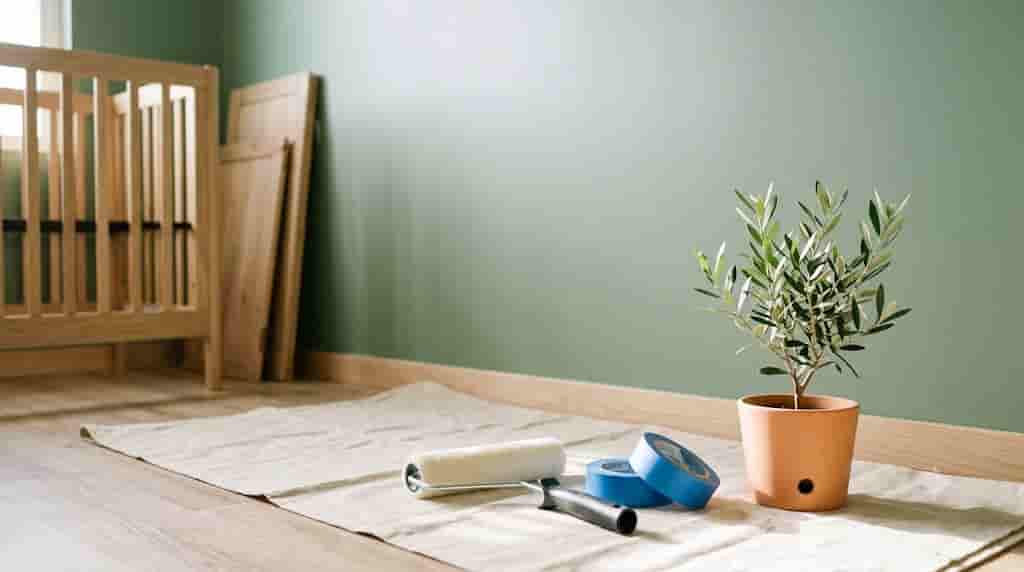
When preparing a room for a newborn who will be spending 12 to 16 hours a day inside, air quality is non-negotiable.
Understanding VOCs (Volatile Organic Compounds)
VOCs are chemicals released as gasses from traditional paints as they dry (and for months afterward). They can irritate delicate lungs, exacerbate infant asthma, and cause headaches.
When shopping at Lowe's, Home Depot, or independent paint stores, look for these specific certifications:
- GREENGUARD Gold Certified: The gold standard for nursery safety. It tests for over 10,000 chemicals and volatile organic compounds to ensure indoor air remains clean.
- Zero-VOC (Post-Colorant): Make sure the base paint AND the color pigments used to mix it are Zero-VOC. Some paints start Zero-VOC, but the color tint added at the counter introduces VOCs back in.
The Best Non-Toxic Nursery Paint Lines
- Benjamin Moore Eco Spec: Zero-VOC, Zero-Emissions, and GREENGUARD Gold Certified. Formulated specifically for sensitive environments.
- Sherwin-Williams Harmony: Zero-VOC paint featuring air-purifying technology that helps reduce ambient indoor odors.
- Behr Premium Plus (Home Depot): A budget-friendly, Zero-VOC, low-odor option that performs great for DIYers.
- Clare Paint: A direct-to-consumer brand offering Zero-VOC, GREENGUARD Gold certified paints in gorgeous curated colors.
When to Paint & Ventilation Timeline
- Ideal Timeline: Paint the nursery at least 30 to 60 days before baby's due date. Even with Zero-VOC paints, letting the room fully cure and off-gas gives you total peace of mind.
- Speed Up the Process: Place a box fan in the window pointing outward to vent the air, and run a high-quality HEPA air purifier with an activated carbon filter (like a Coway or Blueair) in the room for a few days post-painting.
Chapter 6: Budget Breakdown — How Much Will It Actually Cost?
Let's talk numbers. Here is what you can expect to spend to transform a typical 10ft x 12ft (approx. 350-400 sq. ft. of wall space) US nursery.
Option A: The DIY Route (Weekend Project)
If you’re rolling up your sleeves and doing it yourself, you'll only need to pay for materials:
- 2 Gallons of Zero-VOC Paint: $90 ~ $160
- 1 Gallon of Non-Toxic Primer: $30 ~ $50
- Supplies (Purdy brushes, FrogTape, Wooster roller, drop cloths): $60 ~ $90
- Total DIY Cost: $180 ~ $300
Option B: Hiring a Professional Painter
If you prefer to skip the ladder and let a pro handle the prep work, taping, and cleanup:
- Labor & Materials (Standard 10x12 room): $500 ~ $900
- Wall Repairs (if patching old drywall/nail holes): $100 ~ $250 extra
- Total Pro Cost: $600 ~ $1,150
Final Thoughts: Designing a Peaceful Haven
At the end of the day, you aren't just picking a paint color or decorating a room—you're creating the very first sanctuary where you and your baby will share late-night snuggles, quiet morning milestone chuckles, and sweet bedtime stories.
By choosing a soft, slumber-friendly shade like sage green and sticking to non-toxic, Zero-VOC finishes, you are building a space that is as safe and healthy as it is beautiful.
So go ahead: Order a few peel-and-stick swatches, test them against your nursery's light, and enjoy every single moment of nesting! 💚
Disclaimer: This article contains affiliate links. If you choose to purchase through these links, I may receive a small commission at no extra cost to you. I only recommend products I genuinely believe in.